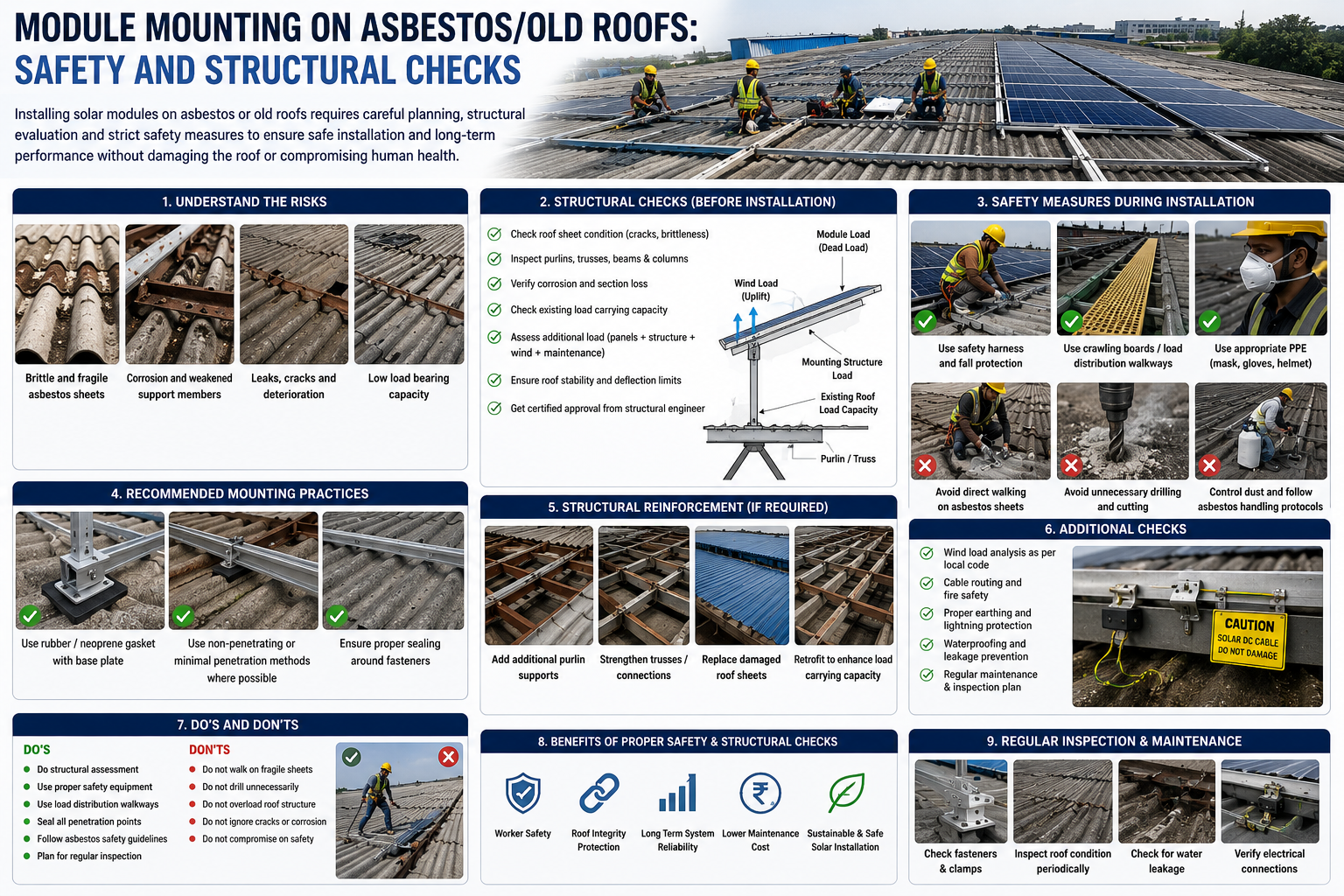
As rooftop solar installations continue to expand across industrial, commercial, and warehouse facilities, many businesses are exploring the possibility of installing photovoltaic (PV) modules on older buildings with asbestos cement sheets or aging roofing structures. While utilizing existing roof space for solar generation can provide excellent long-term energy savings, mounting solar systems on old or fragile roofs requires detailed engineering evaluation, structural verification, and strict safety planning.
Old roofing systems often present hidden risks that may affect both worker safety and long-term solar system reliability. Without proper assessment, rooftop solar installation on deteriorated roofs can lead to structural failure, roof damage, leakage problems, operational downtime, and safety hazards. Therefore, before proceeding with any installation, a comprehensive technical and structural analysis is essential.
Understanding the Condition of Old Roofs
Many industrial facilities constructed decades ago use asbestos cement sheets, old GI sheets, or aging metal roofing systems. Over time, these roofing materials undergo gradual deterioration due to:
- Environmental exposure
- Corrosion
- Moisture penetration
- Thermal expansion and contraction
- UV degradation
- Industrial pollution
As roofs age, their ability to withstand additional loading decreases significantly. Cracks, rusted supports, weakened trusses, loose fasteners, and water-damaged members are commonly observed in old structures. Installing solar modules without evaluating these conditions can create serious operational and safety risks.
Why Structural Assessment Is Critical
A rooftop solar installation introduces additional dead load, wind load, and maintenance load onto the roof structure. Even though solar systems are relatively lightweight, older roofs may already be operating near their structural capacity.
A professional structural audit helps determine whether the roof can safely support:
- Solar modules
- Mounting structures
- Cable trays
- Junction boxes
- Maintenance personnel
- Wind uplift forces
Structural engineers generally inspect:
- Roof sheet integrity
- Purlins and trusses
- Column stability
- Corrosion levels
- Existing deformation
- Load-bearing capacity
- Connection strength
This analysis ensures the roof can safely sustain long-term solar operation without excessive stress or structural failure.
Special Concerns with Asbestos Roofs
Asbestos cement roofing requires additional caution because the material becomes extremely brittle with age. Walking directly on asbestos sheets can easily cause cracking or collapse, creating serious fall hazards for workers.
Another important concern is health safety. Damaged asbestos materials may release microscopic airborne fibers, which are hazardous when inhaled. Therefore, improper drilling, cutting, or handling of asbestos sheets can create occupational health risks during installation activities.
Because of these hazards, solar installation on asbestos roofs should always follow controlled safety procedures and professional handling practices.
Safety Measures During Installation
Controlled Roof Access
Workers should never step directly on asbestos sheets or weak roof areas. Load-distribution walkways, crawling boards, or temporary platforms should be used to safely distribute weight during installation and maintenance activities.
Personal Protective Equipment (PPE)
Installation personnel should use:
- Safety harnesses
- Respiratory protection masks
- Helmets
- Protective gloves
- Anti-slip footwear
- Safety lines and fall arrest systems
These measures significantly reduce workplace accidents and exposure risks.
Restricted Roof Penetration
Excessive drilling or uncontrolled cutting of asbestos sheets should be avoided wherever possible. Non-invasive or minimally invasive mounting solutions are often preferred for fragile roofs.
Controlled Dust Management
If roof modification becomes unavoidable, proper dust suppression methods and asbestos handling protocols must be implemented to prevent hazardous fiber release.
Importance of Wind Load Analysis
Solar modules create aerodynamic uplift forces during high wind conditions. Improper mounting design can transfer excessive stress onto fragile roofing systems.
Engineers therefore conduct wind load analysis based on:
- Building height
- Roof geometry
- Local wind zone
- Terrain conditions
- Mounting angle
- Panel arrangement
This ensures the solar mounting structure remains stable without damaging the roof during extreme weather conditions.
Lightweight Mounting Structures
For older roofs, lightweight solar mounting systems are generally preferred to reduce structural stress. Properly engineered aluminum or optimized steel structures help minimize additional loading while maintaining adequate strength and durability.
Design considerations include:
- Load distribution
- Structural anchoring
- Corrosion resistance
- Thermal movement
- Vibration control
- Maintenance accessibility
A balanced structural design improves both roof safety and solar system longevity.
Roof Reinforcement and Retrofitting
In some cases, existing roofs may require strengthening before solar installation. Structural retrofitting can include:
- Additional purlin supports
- Truss reinforcement
- Corroded member replacement
- Roof sheet replacement
- Connection strengthening
Retrofitting helps extend roof lifespan and improves overall system reliability.
Many industries now combine roof rehabilitation with solar projects to achieve better long-term operational performance.
Waterproofing and Leakage Prevention
One of the most common post-installation issues on old roofs is water leakage caused by improper fastening or damaged roofing materials.
To maintain roof integrity, installers should use:
- Waterproof fasteners
- Proper sealing compounds
- Corrosion-resistant hardware
- Controlled penetration techniques
- Leak-proof flashing systems
Proper waterproofing prevents long-term maintenance problems and protects building interiors from water damage.
Electrical and Fire Safety
Apart from structural considerations, electrical safety is equally important during rooftop solar installation.
Critical safety measures include:
- Proper cable routing
- Fire-resistant cable management
- Earthing and grounding systems
- Lightning protection
- Isolation switches
- Safe inverter placement
A properly engineered electrical design minimizes fire risk and improves operational safety.
Long-Term Maintenance Considerations
Old roofs require regular monitoring after solar installation to ensure continued structural stability and safe operation.
Routine inspections should include:
- Roof sheet condition
- Corrosion assessment
- Fastener tightening
- Water leakage checks
- Mounting structure stability
- Electrical safety inspection
Preventive maintenance helps identify early-stage issues before they become major operational problems.