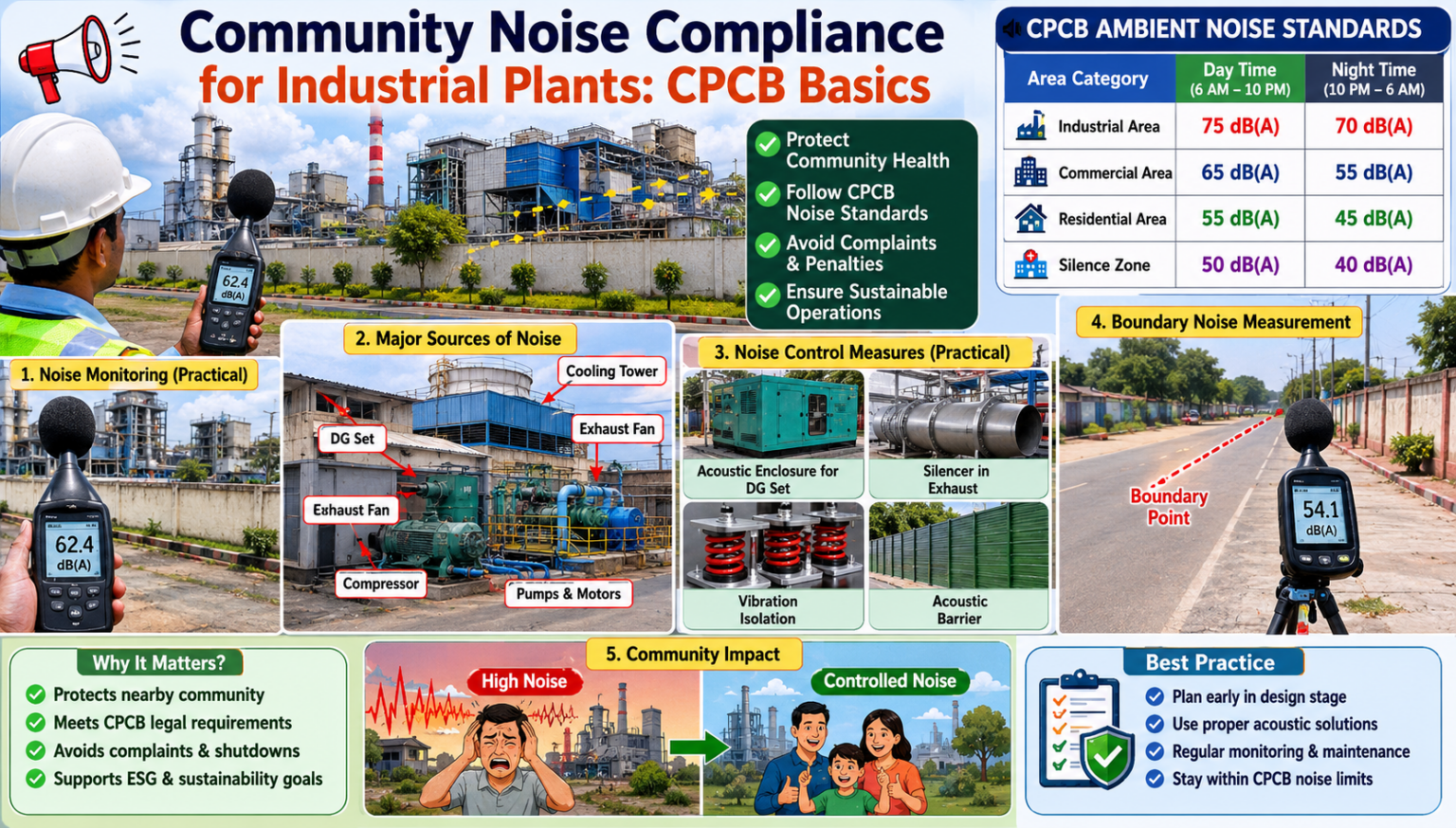
Industrial growth is essential for economic development, but it must also coexist responsibly with nearby residential and commercial communities. One of the most common concerns around factories, manufacturing units, DG sets, HVAC systems, and utility plants is environmental noise. In India, the Central Pollution Control Board (CPCB) has established guidelines and standards to regulate industrial noise and protect public health.
For industrial plant owners, consultants, and facility managers, understanding CPCB noise compliance basics is critical not only for legal approval but also for maintaining good community relations and avoiding complaints, penalties, or operational restrictions.
Why Noise Compliance Matters
Continuous industrial noise can affect nearby residents, schools, hospitals, and office areas. Excessive sound levels may lead to:
- Sleep disturbance
- Stress and fatigue
- Reduced productivity
- Hearing-related health risks
- Community disputes and legal complaints
Modern industries are therefore expected to adopt proactive noise-control measures during project planning itself rather than treating noise issues after installation.