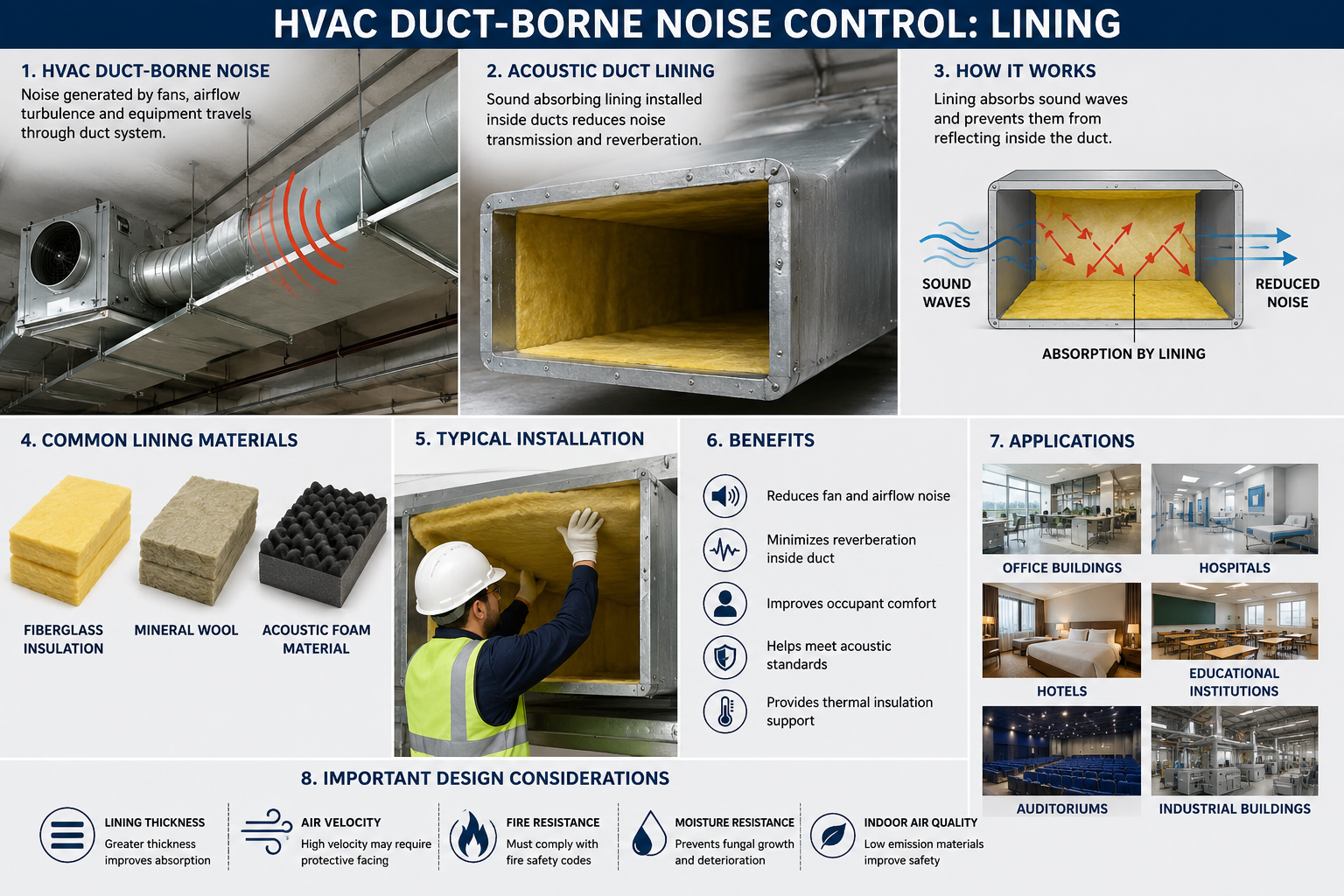
Modern buildings demand more than efficient heating and cooling systems — they also require quiet, comfortable indoor environments. One of the most common yet overlooked sources of indoor disturbance is HVAC duct-borne noise. Without proper noise control measures, sound generated by fans, airflow, and mechanical equipment can travel through duct systems and affect occupant comfort across the building.
Acoustic duct lining is one of the most effective solutions for controlling HVAC noise transmission while improving overall system performance.
What is HVAC Duct-Borne Noise?
Duct-borne noise refers to sound that travels through HVAC duct networks from mechanical equipment such as:
- Air Handling Units (AHUs)
- Fans and blowers
- Variable Air Volume (VAV) systems
- Dampers and diffusers
- High-velocity airflow
This noise can spread from one area to another through connected duct systems, creating discomfort in offices, hospitals, hotels, educational institutions, and residential buildings.
What is Acoustic Duct Lining?
Acoustic duct lining is a sound-absorbing material installed inside HVAC ducts to reduce noise transmission and reverberation. These linings are typically manufactured from high-performance acoustic insulation materials such as fiberglass or mineral wool with protective surface coatings.
The lining absorbs sound energy generated within the duct, preventing excessive noise reflection and propagation throughout the HVAC system.
Benefits of Acoustic Duct Lining
Effective Noise Reduction
Acoustic lining significantly reduces fan noise, airflow turbulence, and vibration-related sound transmission within duct systems.
Improved Indoor Comfort
Lower noise levels create quieter and more productive indoor environments for occupants.
Thermal Insulation Support
Many duct lining materials also provide thermal insulation, helping improve HVAC energy efficiency.
Reduced Cross-Talk Between Rooms
Acoustic lining helps minimize sound transfer between rooms connected through common ductwork.
Compliance with Acoustic Standards
Proper duct noise control assists projects in meeting building acoustic requirements and industry standards.
Key Design Considerations
Selecting the right acoustic lining depends on several technical factors:
| Design Factor | Importance |
|---|---|
| Lining Thickness | Determines sound absorption performance |
| Air Velocity | High airflow may require reinforced surfaces |
| Fire Safety | Materials must comply with fire regulations |
| Moisture Resistance | Prevents microbial growth and deterioration |
| Indoor Air Quality | Low-emission materials improve safety |
Professional HVAC acoustic design ensures optimal performance without affecting airflow efficiency.
Common Applications
Acoustic duct lining is widely used in:
- Commercial buildings
- Hospitals and healthcare facilities
- Hotels and hospitality projects
- Educational institutions
- Auditoriums and theaters
- Industrial HVAC systems
- Data centers and control rooms
Noise-sensitive environments especially benefit from advanced duct acoustic treatments.
Importance of Proper Installation
Even high-quality acoustic materials may underperform if installed incorrectly. Proper installation ensures:
- Continuous acoustic coverage
- Secure adhesion and fixing
- Airflow compatibility
- Long-term durability
- Reduced maintenance issues
Experienced HVAC contractors and acoustic consultants play a crucial role in achieving effective noise control performance.
Maintenance and Long-Term Performance
Routine HVAC maintenance should include inspection of duct lining conditions to ensure:
- No moisture accumulation
- No damaged surfaces
- Clean and contamination-free insulation
- Proper airflow conditions
Modern acoustic lining products are designed for durability, fire resistance, and compliance with indoor air quality standards.
HVAC duct-borne noise can significantly impact occupant comfort and building performance if not properly controlled. Acoustic duct lining provides an efficient and cost-effective solution for reducing noise transmission while supporting thermal efficiency and improved indoor environmental quality.
As modern construction increasingly prioritizes acoustic comfort and sustainable building performance, properly designed HVAC noise control systems are becoming an essential component of high-quality building infrastructure.