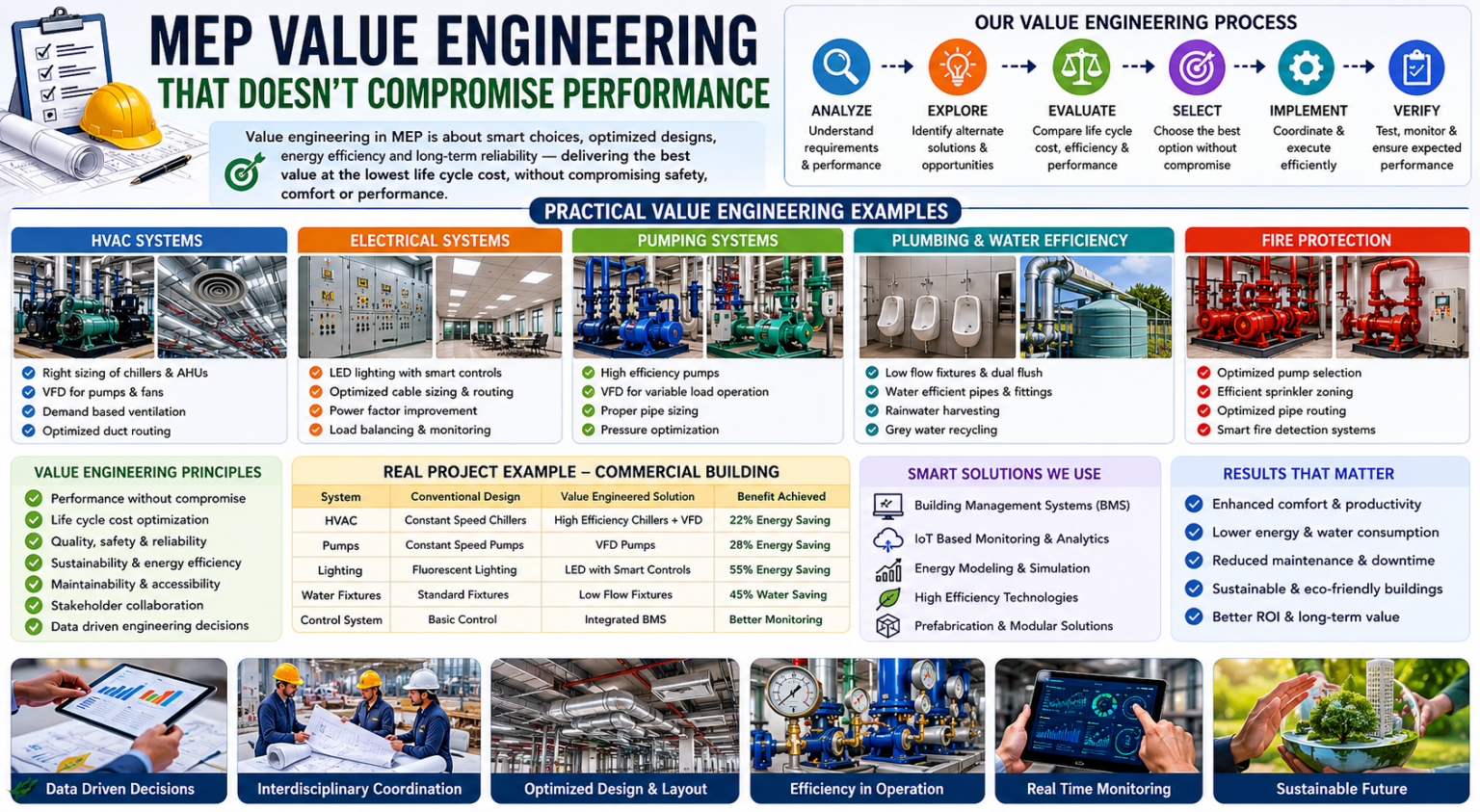
In modern construction projects, cost optimization is important — but reducing cost should never reduce system reliability, efficiency, safety, or occupant comfort. This is where MEP value engineering plays a major role.
MEP (Mechanical, Electrical, and Plumbing) value engineering is not about choosing the cheapest option. Instead, it focuses on selecting smarter designs, optimized equipment, and practical engineering solutions that maintain performance while improving overall project value.
When done correctly, value engineering can significantly reduce capital cost, operational expenses, energy consumption, and maintenance issues without compromising system quality.
What Is MEP Value Engineering?
MEP value engineering is a systematic process used during design and execution stages to analyze:
- Equipment selection
- Material specifications
- System layouts
- Energy efficiency
- Installation methods
- Lifecycle cost
The goal is to achieve the required performance at the best possible cost.
Instead of overdesigning or underdesigning systems, engineers optimize the project based on actual operational requirements.
Why Value Engineering Matters in MEP Projects
Large commercial, industrial, healthcare, and infrastructure projects often have high MEP costs. Poor planning may result in:
- Oversized HVAC systems
- Excessive electrical capacity
- Inefficient plumbing layouts
- High maintenance requirements
- Increased energy bills
Practical value engineering helps eliminate unnecessary expenses while maintaining compliance and operational reliability.
Practical Areas Where MEP Value Engineering Helps
HVAC Systems
HVAC systems contribute a major portion of project energy consumption. Value engineering can include:
- Correct equipment sizing
- Variable frequency drives (VFDs)
- Energy-efficient chillers
- Optimized duct routing
- Demand-based ventilation
Proper HVAC optimization improves energy savings without affecting occupant comfort.
Electrical Systems
Electrical value engineering focuses on efficient power distribution and optimized infrastructure.
Examples include:
- Bus duct optimization
- Energy-efficient lighting systems
- Smart controls and automation
- Load balancing
- Optimized cable sizing
These measures reduce both installation and operational costs.
Plumbing Systems
Plumbing value engineering improves water efficiency and maintenance performance.
Practical solutions include:
- Low-flow fixtures
- Pressure optimization
- Efficient pump selection
- Water recycling integration
- Improved piping layouts
This reduces water consumption and long-term operating expenses.
Fire Protection Systems
In fire protection systems, value engineering ensures compliance while optimizing installation costs.
Examples include:
- Efficient sprinkler zoning
- Optimized pump selection
- Standardized equipment
- Intelligent piping layouts
Safety standards must never be compromised during optimization.
Importance of Lifecycle Cost Analysis
A low initial cost does not always mean better value.
For example:
- Cheap pumps may consume more electricity
- Low-quality fixtures may fail frequently
- Poor insulation may increase HVAC load
- Inefficient lighting increases energy bills
MEP value engineering focuses on total lifecycle cost rather than only initial procurement cost.
Common Practical Value Engineering Strategies
Equipment Right-Sizing
Oversized systems waste energy and increase capital cost. Accurate load calculations help select proper equipment capacity.
Standardization
Using standardized components reduces maintenance complexity and spare inventory requirements.
Smart Automation
Building Management Systems (BMS) and smart controls improve operational efficiency and monitoring.
Coordination During Design
Early coordination between architectural, structural, and MEP teams prevents rework and site clashes.
Energy-Efficient Technologies
Selecting high-efficiency motors, chillers, pumps, and lighting systems improves long-term savings.
Real-World Example
Conventional Design
- Constant speed pumps
- Oversized chillers
- Fluorescent lighting
- Manual controls
Value-Engineered Design
- Variable speed pumping
- Correctly sized chillers
- LED lighting
- Smart automation controls
Result
- Lower energy consumption
- Reduced maintenance
- Better operational efficiency
- Improved sustainability
- Lower lifecycle cost
Value Engineering Is Not Cost Cutting
One of the biggest misconceptions is that value engineering means reducing quality.
In reality, proper value engineering:
- Improves system efficiency
- Enhances maintainability
- Reduces operational waste
- Supports sustainability goals
- Maintains safety and compliance
The focus is on engineering optimization — not compromise.
Role of MEP Consultants
Experienced MEP consultants play a critical role in identifying practical optimization opportunities through:
- Load analysis
- Simulation studies
- Equipment comparison
- Lifecycle costing
- System integration reviews
Professional engineering decisions ensure that cost savings do not negatively affect performance.
Final Thoughts
Successful MEP value engineering balances cost, performance, reliability, and sustainability. The best projects are not always the cheapest initially — they are the ones that perform efficiently throughout their lifecycle.
By adopting practical engineering strategies, coordinated design approaches, and energy-efficient technologies, industries and building owners can achieve optimized MEP systems without compromising operational performance or occupant comfort.